What Is a Dental Crown?
A Simple Guide to Dental Crowns: Types, Uses, and How to Choose the Right One If your dentist has recommended a dental crown, you might be wondering: What type should I choose? Don’t worry—this guide will walk you through the different types of dental crowns based on the material they’re made from, when they’re used, and their advantages, all in simple, easy-to-understand language.
What Is a Dental Crown?
A dental crown is a cap placed over a damaged or weakened tooth to restore its shape, strength, and appearance. Think of it like a protective helmet for your tooth.
Types of Dental Crowns Based on Material
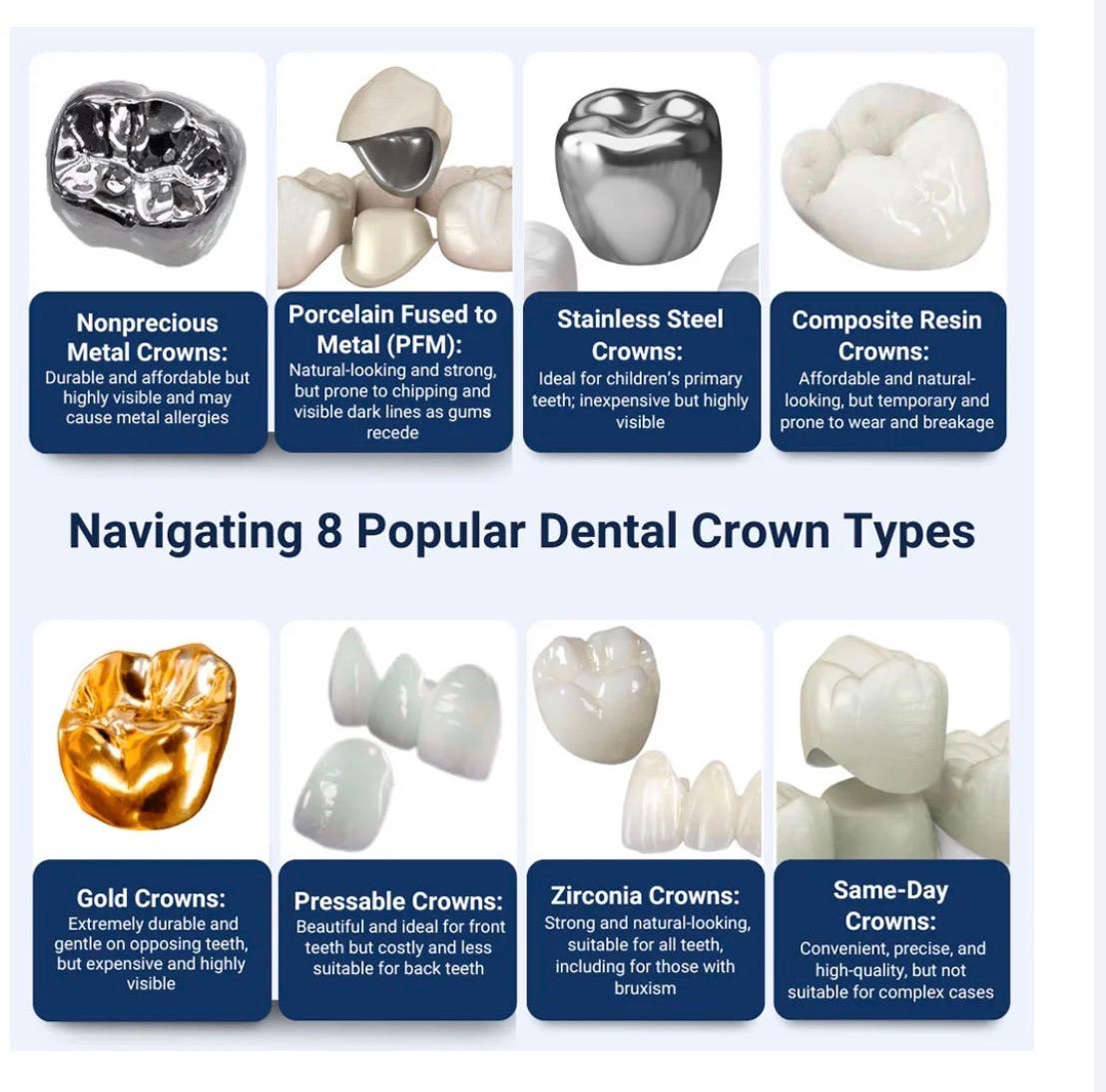
1. Metal Crowns (Gold or Metal Alloys)
What are they?
Made from metals like gold, platinum, or other alloys.
When are they used?
-
Back teeth (molars) where strength matters more than appearance
-
Patients who grind their teeth heavily
Advantages:
-
Extremely strong and long-lasting
-
Rarely chip or break
-
Require less removal of natural tooth
Downside:
-
Metallic color (not tooth-like)
2. Porcelain-Fused-to-Metal (PFM) Crowns
What are they?
A combination of a metal base covered with tooth-colored porcelain.
When are they used?
-
Both front and back teeth
-
When you want strength + decent appearance
Advantages:
-
Strong due to metal core
-
Looks more natural than full metal crowns
Downside:
-
Over time, a dark line may appear near the gums
-
Porcelain layer can chip
3. All-Ceramic or All-Porcelain Crowns
What are they?
Made entirely of ceramic or porcelain materials.
When are they used?
-
Front teeth (where appearance is most important)
-
Patients with metal allergies
Advantages:
-
Most natural-looking option
-
Matches your tooth color very well
-
Biocompatible (gentle on gums)
Downside:
-
Not as strong as metal for heavy chewing areas
-
Can be more expensive
4. Zirconia Crowns
What are they?
Made from a very strong material called zirconia.
When are they used?
-
Both front and back teeth
-
Patients needing durability and aesthetics
Advantages:
-
Extremely strong and durable
-
Tooth-colored appearance
-
Less likely to chip
Downside:
-
Slightly less natural-looking than pure porcelain (in some cases)
-
Can wear down opposing teeth if not polished well
5. Resin Crowns
What are they?
Made from composite resin (similar to filling material).
When are they used?
-
Temporary crowns
-
Budget-friendly options
Advantages:
-
Less expensive
-
Quick to make
Downside:
-
Less durable
-
More prone to wear and fractures
How to Choose the Right Crown?
Here’s a simple way to decide:
-
For front teeth (appearance matters most):
All-ceramic or porcelain crowns -
For back teeth (strength matters most):
Metal or zirconia crowns -
For a balance of strength and looks:
Porcelain-fused-to-metal or zirconia -
If you’re on a budget or need temporary fix:
Resin crowns
Conclusion
Choosing the right dental crown depends on your needs, budget, and where the crown will be placed in your mouth. There’s no “one-size-fits-all” option—your dentist will help guide you, but understanding your choices helps you make a confident decision.
If you’re unsure, don’t hesitate to ask your dentist:
-
How long will this crown last?
-
Will it look natural?
-
Is it suitable for my chewing habits?
Your smile is an investment—choose wisely!